Introduction to RESTful Web Services
HTTP History
HTTP/1.0
-
Development of HTTP was started by Tim Berners-Lee of CERN in 1989
-
HTTP/0.9 is the Original HTTP proposal by Tim Berners-Lee
-
Started as a telnet friendly protocol
-
HTTP/1.0 - From 1991 to 1995 the HTTP/HTML specifications grew rapidly
-
New software known as a “web browser” emerged
-
HTTP standards were developed by:
-
IETF - Internet Engineering Task Force
-
W3C - World Wide Web Consortium
-
HTTP/1.1
-
HTTP/1.1 - Originally released in 1997
-
Solved a lot of ambiguities from earlier versions
-
Added support for keep alive connections, chunked encoding transfers, byte-range requests, transfer encodings, and request pipelining
-
HTTP/1.1 - Updated by RFC 2616 in 1999
-
Updated again by RFC 7230 in 2014
-
Still in use today
-
Request & Response: Added encoding, charset, and cookies
HTTP/2
-
HTTP/2 Standardized in 2015
- Originally named HTTP/2.0
-
Supported by most servers and browsers by the end of 2015
-
As of October 2021, 47% of the top 10 Million websites supported HTTP/2
-
Has high level of compatibility with HTTP/1.1
-
Transport Performance was a focus of HTTP/2
-
Improves page load speed by:
-
Lower Latency
-
Higher Throughput
-
-
Differences from HTTP/1.1 are largely transparent for web developers
HTTP/3
-
HTTP/3 was accepted by IETF in November of 2018
-
As of summer of 2022, HTTP/3 is supported by 73% of browsers and 25% of the top 10 million websites.
-
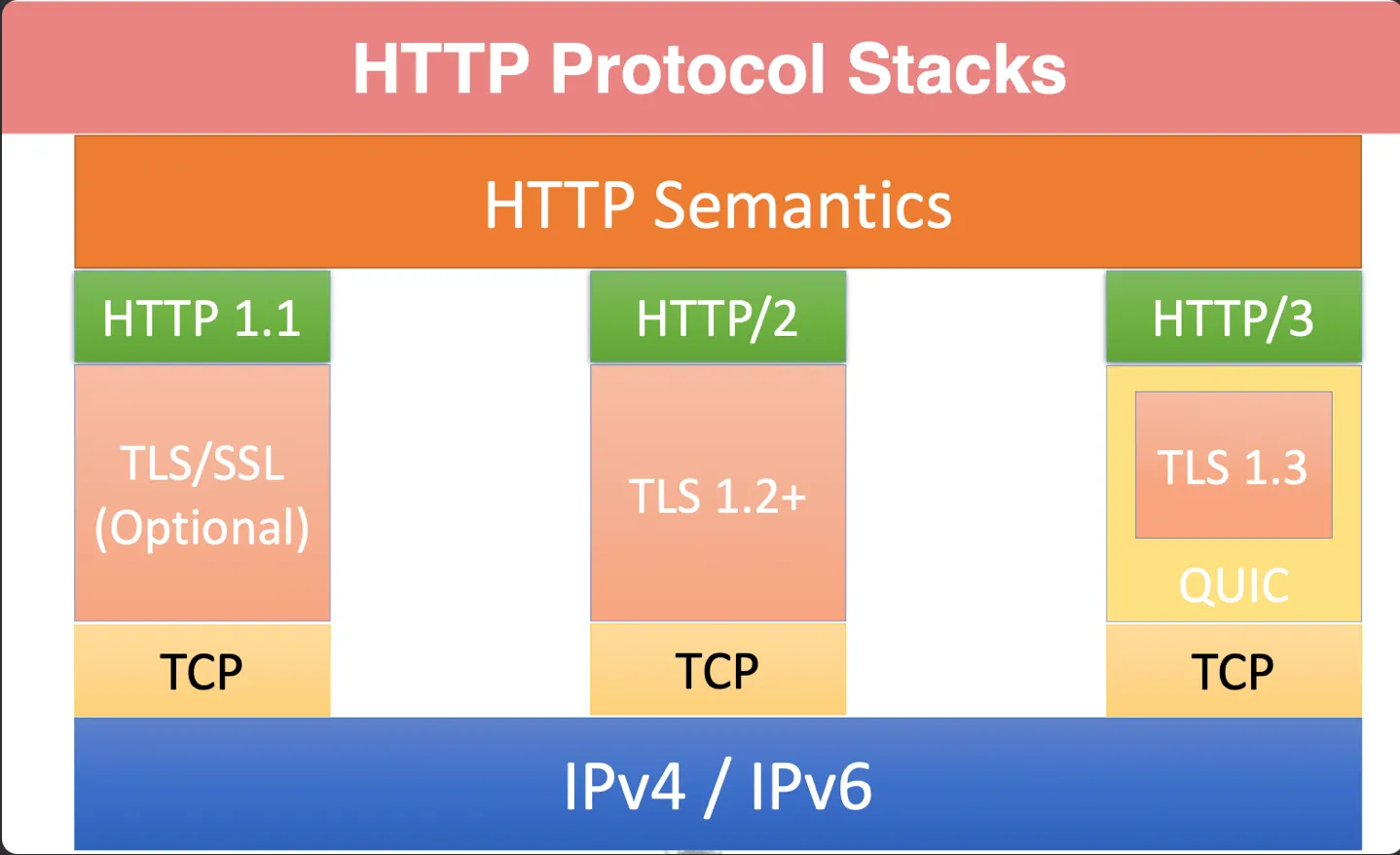
Builds on concepts of HTTP/2
-
Most significant change is use of the QUIC network protocol rather than TCP
-
No significant changes for developers
-
Adoption in the Java community is early and evolving
HTTP Request Methods
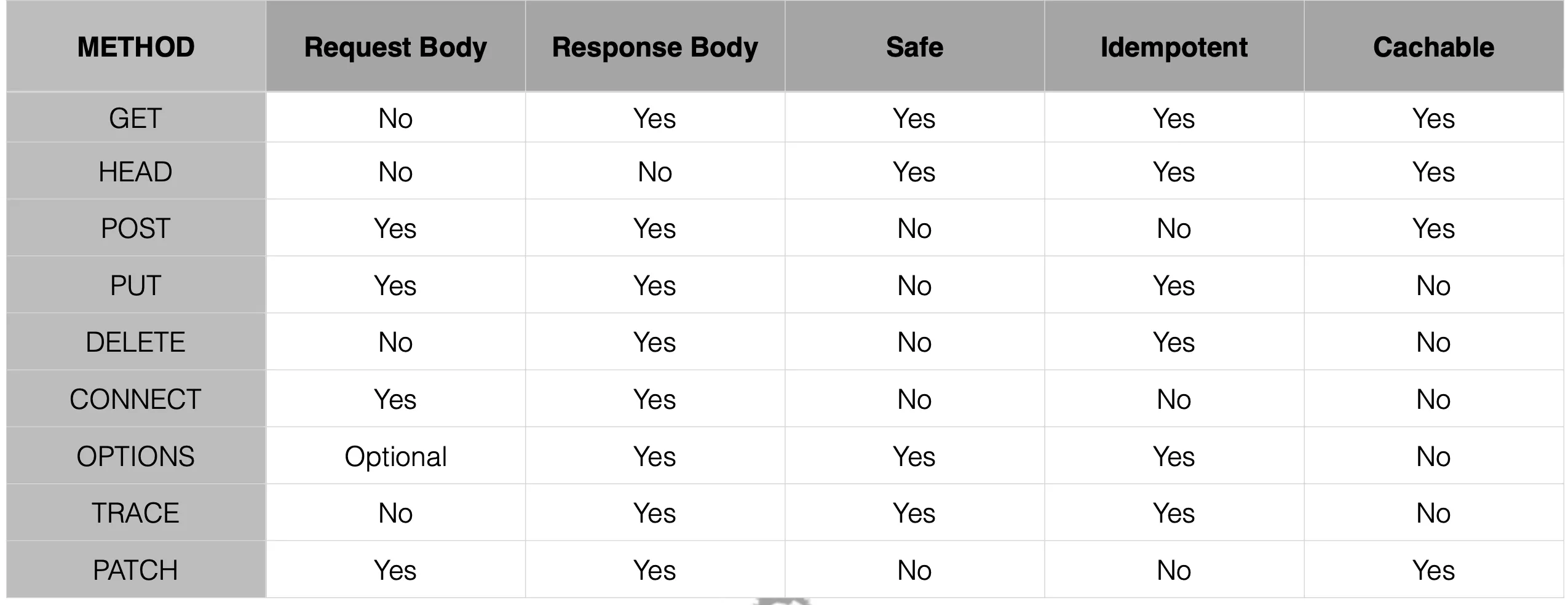
- Request methods, also known as verbs, are used to indicate the desired action to be performed
- GET - is a request for a resource (html file, javascript file, image, etc)
- GET - is used when you visit a website.
- HEAD - is like GET, but only asks for meta information without the body.
- POST - is used to post data to the server.
- Typical use case for POST is to post form data to the server (like a checkout form)
- PUT - is a request for the enclosed entity be stored at the supplied URI. If the entity exists, it is expected to be updated.
- POST is a create request
- PUT is a create OR update request
- DELETE - Is a request to delete the specified resource
- TRACE - Will echo the received request. Can be used to see if request was altered by intermediate servers
- OPTIONS - Returns the HTTP methods supported by the server for the specified URL
- CONNECT - Converts the request to a transparent TCP/IP tunnel, typically for HTTPS through an unencrypted HTTP proxy
- PATCH - Applies partial modifications to the specified resource
Safe Methods
- Safe Methods are considered safe to use because they only fetch information and do not cause changes on the server
- The Safe Methods are: GET, HEAD, OPTIONS, and TRACE
Idempotent Methods
- Idempotency - A quality of an action such that repetitions of the action have no further effect on the outcome
- PUT and DELETE are Idempotent Methods
- Safe Methods (GET, HEAD, TRACE, OPTIONS) are also Idempotent
- Being truly Idempotent is not enforced by the protocol
Non-idempotent Methods
- POST is NOT Idempotent
- Multiple Posts are likely to create multiple resources
- Ever seen websites asking you to click submit only once?
HTTP Status Codes
- 100 series are informational in nature
- 200 series indicate successful request
- 300 series are redirections
- 400 series are client errors
- 500 series are server side errors
Common HTTP Status Codes
- 200 Okay; 201 Created; 204 Accepted
- 301 Moved Permanently
- 400 Bad Request; 401 Not Authorized; 404 Not Found
- 500 Internal Server Error; 503 Service Unavailable